How to Move from Temporary Jobs to Permanent Work in Singapore
Working a temporary job in Singapore? Learn simple steps to increase your chances of getting a permanent role — from showing reliability to upgrading your skills.

When starting your career in Singapore, one common question arises:
Should you take an internship or a part-time job?
Both options provide valuable experience, but the right choice depends on your career goals, financial needs, and eligibility. Internships are designed for structured learning and career growth, while part-time jobs offer flexibility and income.
In this guide, we’ll compare internships and part-time jobs across industries such as F&B, retail, hospitality, manufacturing, logistics, business, and security, helping you decide which path best supports your career growth.

Internships are structured training programs that provide hands-on experience in a professional setting. They allow students, fresh graduates, or foreigners on approved training passes to learn workplace operations, gain practical skills, and build professional networks.
Typical Internship Roles by Industry:
Benefits of Internships:
Eligibility in Singapore:
Many SMEs offset costs by grooming interns into future hires—see our blog on Permanent Staffing in Singapore to learn how employers view internships as part of a long-term talent pipeline.

Part-time jobs are flexible work arrangements with fewer hours than full-time roles. They are ideal for students, diploma holders, or older locals seeking additional income.
Examples of Part-Time Roles by Industry:
Benefits of Part-Time Jobs:
Note for Foreigners:
Most foreigners cannot take part-time jobs unless explicitly allowed by their Student Pass (e.g., up to 16 hours/week during term time and full-time during school holidays, with approval from MOM and their institution). Regular Work Permit, S Pass, or Employment Pass holders are not permitted to work part-time outside their employment terms.
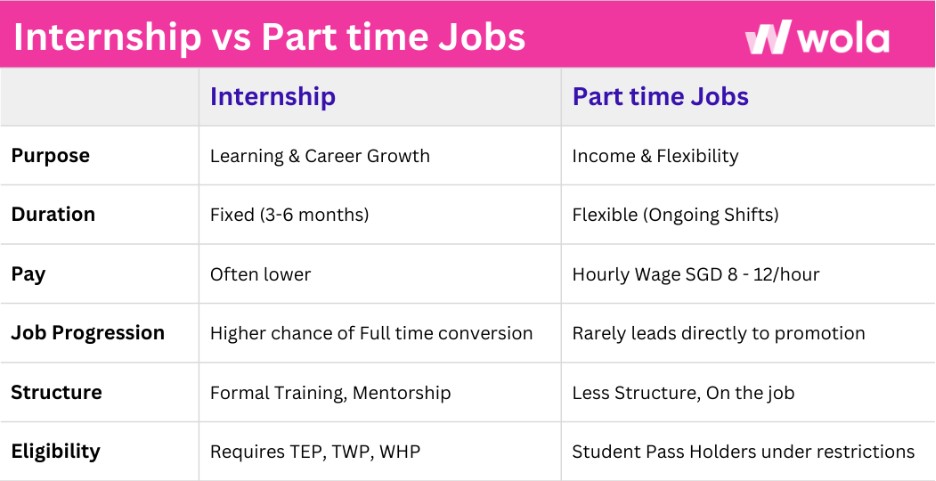
The best option depends on your personal situation and goals:
Internships: Allowances typically range from SGD 800 – 1,200/month, depending on industry and company size.
Part-Time Jobs: Hourly wages average SGD 8 – 12/hour; monthly pay for 20–30 hours/week ranges from SGD 1,200 – 1,800.
💡 Note: While part-time jobs may pay more in the short term, internships provide structured career pathways that can lead to permanent employment and higher salaries later.
Internships → Career Pathways
Internships provide:
Part-Time Jobs → Skill Building
Even without structured training, part-time jobs help develop:
💡 Pro Tip: Even if part-time jobs don’t directly lead to promotions, the combination of skills, certifications, and experience can open doors to higher-paying roles. For a full list of industry-recognized courses, check out Certifications That Boost Employability.
Both internships and part-time jobs provide valuable experience, but their purposes differ:
For locals and PRs: Internships are stepping stones to supervisory or management roles, while part-time jobs supplement income and build basic work experience.
For foreigners: Internships offer Singapore workforce exposure and potential work pass upgrades, while part-time work is limited to Student Pass holders under strict conditions.
Ultimately, the best choice depends on whether your focus is immediate income or long-term career growth.
Kickstart your Singapore career today! Explore internship and part-time opportunities with WOLA to gain hands-on experience, develop in-demand skills, and open doors to permanent employment.

Working a temporary job in Singapore? Learn simple steps to increase your chances of getting a permanent role — from showing reliability to upgrading your skills.
Not sure whether to hire permanent or temporary staff in Singapore? Learn the pros and cons of both staffing options, including costs, flexibility, and retention strategies, to decide what’s best for your SME.

Kickstart your blue-collar career in Singapore with the right job search strategies, internships, and upskilling opportunities. Learn how locals, PRs, and foreigners can grow in retail, F&B, logistics, security, and manufacturing.
Not sure whether to hire permanent or temporary staff in Singapore? Learn the pros and cons of both staffing options, including costs, flexibility, and retention strategies, to decide what’s best for your SME.
Kickstart your blue-collar career in Singapore with the right job search strategies, internships, and upskilling opportunities. Learn how locals, PRs, and foreigners can grow in retail, F&B, logistics, security, and manufacturing.
Working a temporary job in Singapore? Learn simple steps to increase your chances of getting a permanent role — from showing reliability to upgrading your skills.

Hiring permanent staff in Singapore can be challenging for SMEs. Learn common pitfalls, costs, and strategies to build a sustainable workforce, including talent pipelines and internship programs.

Solve your immediate hiring needs. Get fast, agile recruitment solutions based on our pool of pre-screened and qualified candidates for direct hire.

Save precious human resource hours from arduous employee candidate search process, vetting, onboarding and more. Get a dedicated pipeline of affordable and trained manpower today.